Quiet Horizon Publishing
Thoughtful writing at the intersection of identity, psychology, and lived experience.
Quiet Horizon Publishing supports authors who are willing to examine the inner life with honesty and discipline. Our focus remains on thoughtful work that values depth, clarity, and intellectual integrity.


Quiet Horizon Publishing was founded on the belief that the interior life deserves serious attention. We are committed to publishing writers who are willing to examine identity, psychology, education, and personal transformation with both humility and intellectual rigor.
Our work values reflection over reaction, inquiry over ideology, and depth over noise. Each book we publish is rooted in lived experience, disciplined thought, and a respect for the complexity of being human. We do not aim to offer quick fixes or slogans, but to create space for readers and authors alike to think carefully, question honestly, and grow with intention.
We want our readers to encounter work that slows them down rather than agitates them. Books that invite contemplation instead of outrage. Writing that acknowledges ambiguity rather than denying it. Our authors are not driven by the urgency of market trends or the pressure to mirror the mood of the moment. Instead, they approach their work as serious thinkers, willing to wrestle with ideas over time and to follow questions where they lead, even when the answers are not simple. The experience we hope to cultivate is one of intellectual steadiness and personal clarity, where complexity is not simplified for comfort, but explored with care.
While our authors may engage deeply with cultural and social questions, Quiet Horizon Publishing does not operate from a political or religious platform. We are not aligned with parties, movements, or ideological agendas. Our commitment is to intellectual honesty, respectful discourse, and the careful exploration of human experience across difference.
Meet the Author
Lea Taylor
Lea Taylor writes from a lifelong fascination with the architecture of identity and the quiet forces that shape human behavior. Her work reflects years of disciplined inquiry into psychology, education, and the lived realities that shape how individuals come to understand themselves. She approaches writing not as performance or persuasion, but as a method of careful examination.
Her academic interests began in psychology and developed through sustained independent study, research, and extended dialogue with mental health professionals and individuals navigating complex questions of identity. Lea’s analytical background has been shaped not only by formal study, but by decades operating within high-performance environments where clarity of thought, pattern recognition, and disciplined execution were essential. That experience sharpened her ability to synthesize across domains, connecting scientific literature, behavioral theory, and lived experience into coherent, accessible narratives.
In addition to her writing, Lea has spent years in public speaking and coaching roles, guiding individuals and families through high-pressure developmental environments. That work deepened her understanding of how identity forms under expectation, performance standards, and social scrutiny. It also refined her ability to translate complex psychological concepts into language that remains grounded and comprehensible.
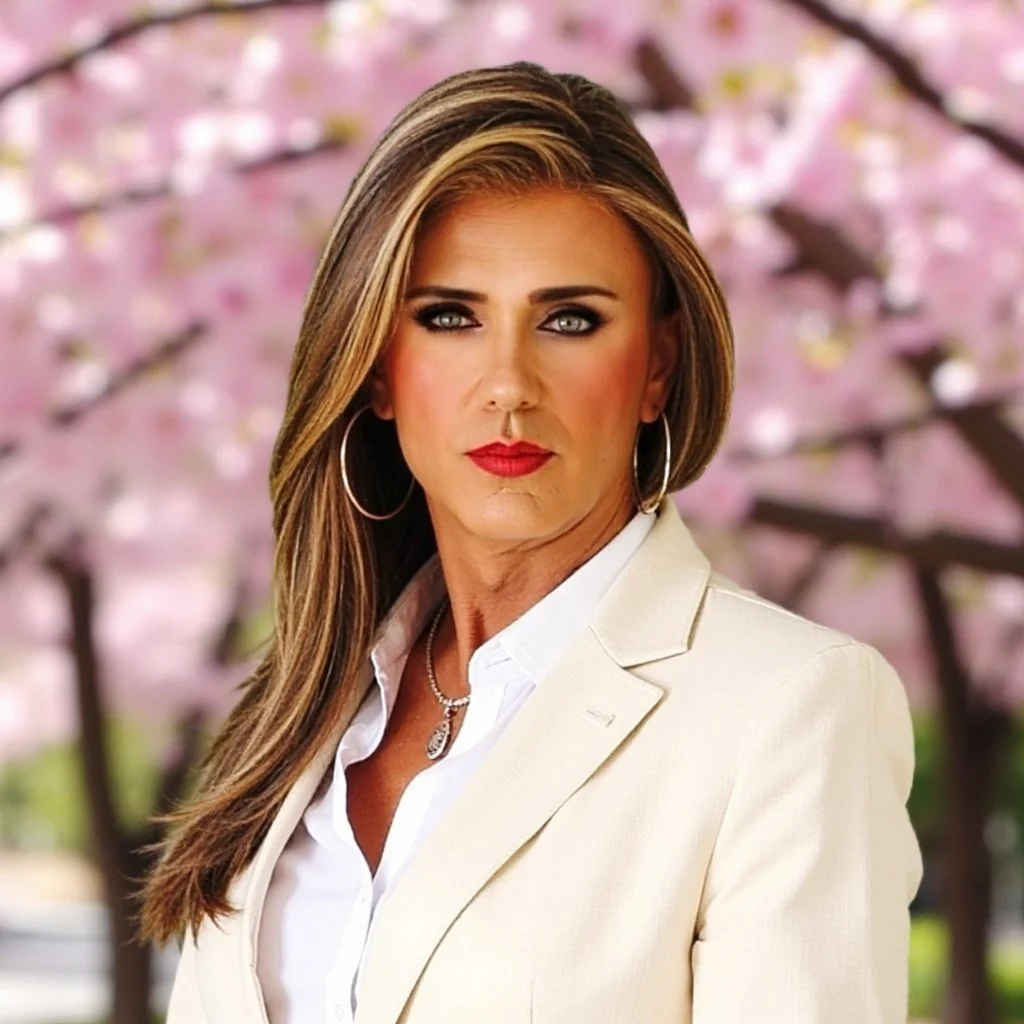
As a transgender woman navigating her own layered and at times contradictory experiences, Lea brings both personal insight and intellectual restraint to her work. She does not treat identity as ideology or spectacle, but as a deeply human reality shaped by biology, psychology, environment, and culture. Her lived experience informs her writing, yet she remains committed to disciplined inquiry rather than reaction or rhetoric.
Lea is known for blending scientific research with story in a way that neither oversimplifies data nor romanticizes narrative. She writes to clarify rather than to inflame, to explore rather than to instruct. Her goal is not to provide slogans or easy resolutions, but to create space where readers can engage complexity without fear of being hurried toward conclusions.
At the center of her work is a steady conviction: that intellectual rigor and personal honesty are not opposing forces. When approached with humility, evidence, and patience, the exploration of identity becomes less about declaration and more about understanding.
If aspects of your own experience resonate with the questions explored here, you are welcome to reach out. Meaningful dialogue often begins with a simple exchange.

For some, gender dysphoria has been present since early memory, woven into childhood in ways that were never fully named. For others, it emerges later, unexpected and disorienting, surfacing in the midst of otherwise stable lives. The book examines both pathways with equal seriousness. It asks how identity forms over time, how it adapts under pressure, and how individuals learn to survive within structures that may not reflect their internal experience. Throughout, the message remains steady: complexity does not mean brokenness. Silence does not equal strength. And the presence of dysphoria is not evidence of defect, but a signal of an internal tension seeking integration.
Through personal narrative, extended interviews, and engagement with psychological research, Lea Taylor moves carefully through themes of masking, perfectionism, performance, and adaptive behavior. Each chapter blends lived experience with scientific exploration in a way that allows both to retain their integrity. Research is not used to win arguments. Story is not used to bypass evidence. The two are held together with restraint, revealing the places where theory and human reality illuminate one another.
A central question runs quietly through the work: what is the psychological cost of prolonged silence. The book explores the gradual erosion that can occur when identity is managed rather than integrated. It considers the strategies that allow individuals to function within expectation, and the moment when those strategies begin to fracture. Rather than offering slogans or simplified affirmations, the book invites readers to examine identity as a developmental process shaped by biology, cognition, culture, and personal history.
The cultural moment surrounding gender identity is marked by urgency, backlash, confusion, and deeply polarized narratives. Public conversation often swings between unquestioned affirmation and reflexive rejection, leaving little room for nuance. Whispers in the Mirror deliberately resists that pattern. It does not operate from a political platform, nor does it seek to defend or condemn. Instead, it slows the conversation down. It asks readers to consider what psychological research suggests, what lived experience reveals, and how human beings adapt when their internal reality conflicts with external expectation.
The writing moves deliberately between reflection and analysis. It creates space for ambiguity, for uncertainty, for intellectual humility. The aim is not persuasion. It is clarity. Not reaction, but comprehension. Readers who are willing to sit with nuance will find themselves drawn into questions that are rarely explored without urgency or accusation.
At its heart, this is a book about integration. About the movement from fragmentation toward coherence. About the courage required to confront what has been hidden, and the steadiness required to examine it honestly. It is written for those who are willing to slow down, to think carefully, and to approach identity not as a slogan, but as a serious and evolving human reality.

Reviews
— Heidi P.
— Diane L.
“Lea’s ability to weave personal narrative with research is exceptional. Her discussions on masking and autogynephilia are among the clearest and most balanced I have read. The structure of alternating lived experience with scientific exploration creates both credibility and depth. By the end, what initially raised questions had been addressed thoughtfully and with intellectual care. Whispers in the Mirror invites readers to examine complexity without oversimplifying it.”
“An outstanding and deeply moving book. I had the privilege of reading it as it was being written, and the emotional depth it carries will resonate with many of us. As a fellow trans woman, I recognized the struggles, the questioning, and the internal conflict that so often go unspoken. Lea lays them out with honesty and care. This is a book that stays with you.”
— Kelli P.
— Jaclyn D. Author
"Lea has shared a heartfelt look at her unfolding transgender life while navigating questions and passive resistance from family members. This book captures the fear of coming out to her family members, and the unexpected joy of acceptance from some of them. Shared stories and exhaustive research she has gathered through her life speak deeply of what many gender dysphoria people experience...initial feelings of guilt and defiance, unflinching determination to be understood, but quietly hopeful. Whispers in the Mirror is perfect for anyone wanting to understand, not just sympathize."
I was privileged to read a portion of this manuscript and can say with surety that this book is a life changer, and probably the most meaningful book to date for the transgender community. A true Gem!
Our Featured Book
Whispers in the Mirror
Whispers in the Mirror is an exploration of identity lived in tension, with gender dysphoria and gender identity at its center. It examines the space between biology and psychology, between social expectation and interior truth, and between the version of a person that is publicly understood and the one that has been quietly negotiated for years. The book does not approach these subjects as ideology or spectacle. It treats them as deeply human realities shaped by development, environment, temperament, and experience.